

The Hidden Risks of Inadequate Safety Barriers: Why Quality Fencing Saves You More in the Long Run
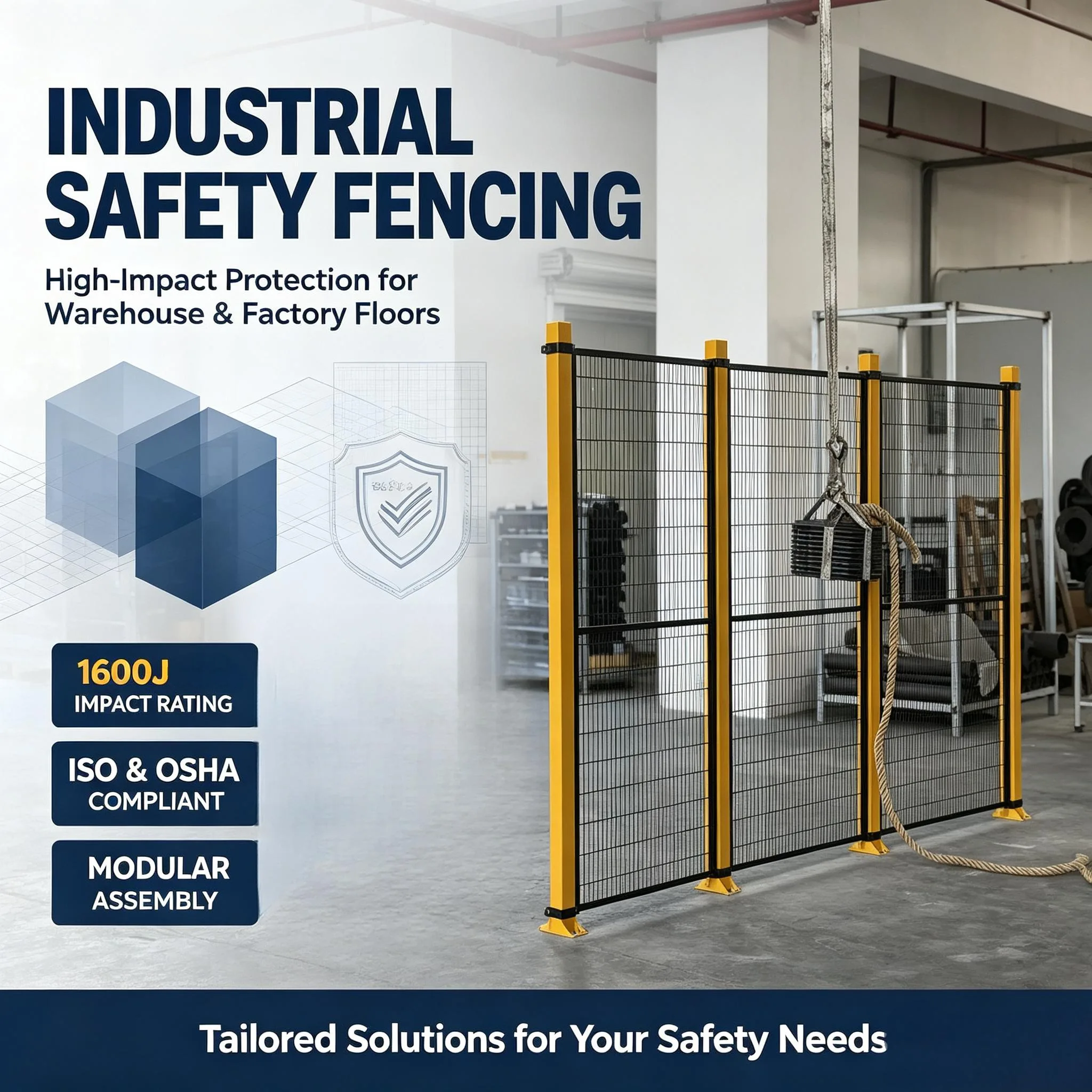
In factory operation management, industrial safety fencing is never merely a metal barrier for zoning. It forms a core risk-control system that protects staff, production schedules and corporate assets.
For most factory owners, procurement managers and facility operators, the primary focus during purchasing is often upfront pricing rather than long-term comprehensive costs. Whether you select low-cost flimsy barriers or premium heavy-duty fencing will directly determine your total operating expenditure, accident risks and business reputation over years of production.
When evaluating factory safety equipment, two core options stand out: budget-grade inferior fencing and high-standard industrial safeguarding systems. Though they serve the same isolation purpose, they create entirely different financial outcomes and safety risks. All business owners share one core concern: will this expenditure bring real returns, or bury hidden financial losses?
Cheap, substandard safety fences are attractive only for their low one-time purchase price. They ignore the full lifecycle costs and potential accident losses that factories may face.
Simply put, choosing low-cost fencing trades short-term savings for huge unpredictable liabilities down the line.
This type of product carries multiple unavoidable financial risks. Inferior thin steel, rough unwelded joints and incomplete anti-corrosion treatment cannot withstand daily forklift collisions, workshop vibration and humid industrial environments. It will deform, rust or crack within a short service cycle. Worse, structural failure easily triggers workplace safety incidents.
In actual factory scenarios, every flaw of low-grade fencing translates into tangible costs: frequent maintenance labor, repeated replacement fees, regulatory fines after safety inspections, compensation for workplace injuries, forced production shutdown losses and irreversible brand damage.
At many manufacturing plants, low-cost barriers are viewed as a quick cost-cutting fix instead of a risk management tool, which creates massive hidden costs that far exceed the initial price gap between cheap and premium fencing. Unlike these entry-level products, all safety solutions designed and manufactured by Brio take full-lifecycle cost and risk control as core design indicators from the very start of development.
For all industrial operators, OSHA, ISO and local workplace safety regulations clearly state that companies must take full responsibility for on-site employee injuries caused by inadequate safety isolation.
Unlike normal equipment maintenance fees, accident-related losses are sudden and extremely costly.
In practice, fragile cheap fencing collapses easily when struck by robotic arms, transport vehicles or heavy goods. Once workers are exposed to hazardous machinery zones, factories face mandatory work stoppages for safety rectification. Suspended order delivery, delayed production cycles and missed client deadlines create immediate revenue losses.
Beyond production downtime, enterprises bear heavy expenses including employee medical bills, work injury compensation, administrative penalties from safety authorities and prolonged legal disputes. For medium and large-scale manufacturers, a single safety accident can generate tens of thousands in unplanned spending.
This is why Brio premium machine guarding fences are engineered for high impact resistance and structural stability: they eliminate the root cause of injury incidents before they occur. Our heavy-duty fencing solutions are built to fully isolate dangerous operating areas and block unauthorized human access during equipment running, fully complying with global safety compliance rules.
A widespread procurement misconception is evaluating fencing only by initial purchase cost, while ignoring cumulative long-term expenses over the product’s service life. The gap between cheap and high-quality products grows wider year after year.
Low-cost inferior fencing comes with continuous recurring overheads:
Weak structural frames and brittle welding joints deform under regular industrial impact, requiring frequent repair work
Lack of galvanizing and powder coating leads to rapid rusting in humid, dusty or chemical workshops
Monthly labor costs for rust removal, part replacement and structural reinforcement
Short service life of only 1–2 years, meaning repeated full procurement cycles
Premium high-performance industrial fencing from Brio delivers sustained long-term savings:
Premium steel frames combined with high-strength welding deliver excellent anti-collision performance for heavy-duty industrial applications.
Complete anti-rust surface treatment resists corrosion, abrasion and harsh indoor and outdoor environments
Minimal routine maintenance; almost no spare part replacement needed throughout service life
Extended service cycle of 8–10 years, supporting one-time installation and decade-long risk control
For factory finance teams calculating total expenditure, Brio premium fencing drastically cuts recurring maintenance and replacement costs, delivering clear economic advantages across its full lifecycle. Our technical team can also provide customized full-lifecycle cost comparison reports for clients to visualize long-term cost savings intuitively.
High-standard safety guarding systems bring benefits beyond direct cost control and accident prevention, including valuable intangible assets for modern manufacturing enterprises.
Neat, uniform, structurally stable premium fencing creates a tidy, standardized and professional factory visual appearance. It helps manufacturers smoothly pass customer site audits, third-party safety certifications and industrial supplier assessments, building a reliable, high-quality brand image among partners and buyers. Brio’s unified modular fence design delivers consistent, neat layout effects for all production workshops.
Meanwhile, fully functional safety isolation eliminates visible on-site hazards and significantly boosts employees’ sense of workplace security. A low-risk working environment reduces staff turnover rates and stabilizes overall production efficiency. Every Brio safeguarding system is tested to remove potential hidden dangers, creating a secure working environment for all frontline staff.
This psychological and brand value cannot be calculated on a price list, yet it drives stable long-term business development.
When business leaders calculate factory investment returns, safety equipment should never be categorized as pure operational expense. It is a risk-mitigation asset that avoids catastrophic unexpected losses.
Brio designs premium safeguarding systems as a complete risk-control solution rather than simple separation panels. Our design logic covers three core business demands of factory owners: cutting long-term operating costs, eliminating accident financial risks and upgrading overall factory standardization.
From a financial perspective, the slightly higher upfront investment offsets huge potential losses from shutdowns, fines and injury compensation. From a management perspective, standardized Brio safety infrastructure simplifies annual safety inspections and reduces compliance risks aligned with ISO 14120, OSHA and AS/NZS standards.
For companies competing against rivals offering low-cost, shoddy guarding products, Brio’s full-lifecycle cost analysis provides clear data to prove that budget fencing is ultimately the more costly option. This framework serves as a powerful sales tool to help clients break the trap of pure price comparison and make rational investment decisions.
Industrial safety fencing is not a disposable low-cost accessory for factory zoning; it is a core risk-control asset tied to corporate revenue, compliance status and brand reputation.
Whether you reference international machine safety standards, calculate long-term operating expenditure or evaluate intangible brand and employee value, the core logic remains consistent: cutting corners on safety barriers creates far greater financial risks over time.
For factory decision-makers, choosing industrial fencing is not merely a procurement choice. It is a long-term investment decision that determines workplace safety, continuous production and stable business operation.
This cost-and-risk-focused mindset is the core principle behind every premium industrial safeguarding solution Brio designs and manufactures.
Need help selecting the right solution? Contact BRIO today for expert advice and a customized machine guarding proposal.